

In our last article, we explored the fascinating world of neuromarketing and its role in the arms race of the attention business model established by the data-driven economy. We found that neuromarketing, the application of neuroscience to marketing, is the pillar of many of today's most successful business models.

But what happens after companies have used neuromarketing techniques to collect colossal volumes of data? This is where data mining comes in. Today we focus on how this data is refined and put to use, revealing the intricate interplay between neuromarketing, data mining and attention business models.
So, what is it? Data mining is the process of identifying patterns, correlations and trends within large data sets. It is like panning for gold in a river of information, sifting the sands of raw data to uncover nuggets of actionable knowledge. In the context of the attention economy, data mining helps companies understand how, when and why consumers pay attention to certain stimuli and overlook others.
Neuromarketing provides the raw material: data on consumers' behavioural responses to marketing stimuli. But this data is often messy, inconsistent and hard to interpret on its own. Data mining refines this raw material into a more usable form.
For example, data mining algorithms can analyze the browsing patterns of millions of users on a social media platform, determining which types of content generate the most engagement. Or they can examine transaction data to identify which promotional offers lead to the highest conversion rates. But it is not limited to these two examples: the details can range from web browsing behaviour, shopping habits, social media activity, geolocation, typing patterns, physical activity and biometric data to in-person social interactions, among others.
This data can give companies valuable information about customer behaviour. It can help them predict future trends, improve marketing strategies and tailor services to meet customers' needs more effectively. By offering detailed insight into customer behaviour, data mining can help companies make data-driven decisions. This can lead to greater operational efficiency, higher profitability and better customer satisfaction. Data mining can also be used to detect fraudulent activity, identify risks and predict future problems. This can be particularly important in industries such as finance and health care.
These insights, once extracted, can be used to improve personalization algorithms, optimize ad targeting, and improve user interfaces, products and services, which ultimately leads to greater user engagement and more revenue, in the best case. But what happens if you are not a company, but a person?
While data mining brings immense benefits to companies, it also raises important ethical considerations for users, since their data, your data, becomes a commodity. In essence, data mining is a tool and, like any tool, its results depend on how it is used. In the right hands, and by that I mean your hands, it can bring great benefits to both people and companies.
As the arms race for attention intensifies, companies are collecting and analyzing more and more personal data, reaching into the most private spaces of our homes and even inside us.
At the tip of the iceberg, this intense scrutiny of data can lead to an invasion of privacy when it is used to power or enhance neuromarketing tools to unethical levels. Consumers may not be aware of how much personal data they are revealing or how it is being used to shape their online experiences and even their real lives. Right now, personal data is in the hands of the largest technology giants, often called the 'Big Five' (Amazon, Apple, Facebook, Google and Microsoft), and this data can be used to exert an unprecedented degree of influence over users' behaviour and decision-making.

With access to personal data, these companies can influence users' behaviour, opinions and decisions in an unprecedented way. This can have significant impacts on society, including the manipulation of democratic processes.
When a small number of companies control a large share of the data, it can stifle competition. Innovative new companies may struggle to compete because they do not have access to the same quantity or quality of data.
This highlights the need for strong regulation and ethical guidelines around the collection and use of data. Transparency is key: users must be fully aware of the data they are sharing and must have the right to control how it is used.
Going further, however, the power of data mining can also be misused, leading to unwanted outcomes that are even more harmful than breaches of data privacy alone. Consider the Cambridge Analytica scandal. In this case, the personal data of millions of Facebook users was harvested and used for political advertising during the 2016 U.S. presidential election, without the users' explicit consent. This incident showed how data mining can be used to manipulate public opinion and infringe individual privacy.
In addition, the centralized collection and storage of large amounts of personal data, whether already mined or waiting to be mined, makes companies an attractive target for cyberattacks. In one of the most infamous examples, the 2013 Yahoo data breach affected approximately 3 billion accounts. Personal data such as names, email addresses, phone numbers and even encrypted passwords were stolen. The Equifax case in 2017 is another significant example, in which sensitive data was exposed, including the social security numbers of approximately 147 million people. These incidents underline the inherent risks of accumulating personal data and demonstrate the immense responsibility companies have to secure their centralized databases.
It is important to recognize the enormous potential of data mining to advance business and technology. But alongside that, the importance of ethical practices, strong data security measures and transparent data policies cannot be overstated.
As we navigate our increasingly interconnected, data-oriented world, companies must prioritize these factors, and users must stay informed about their data rights.
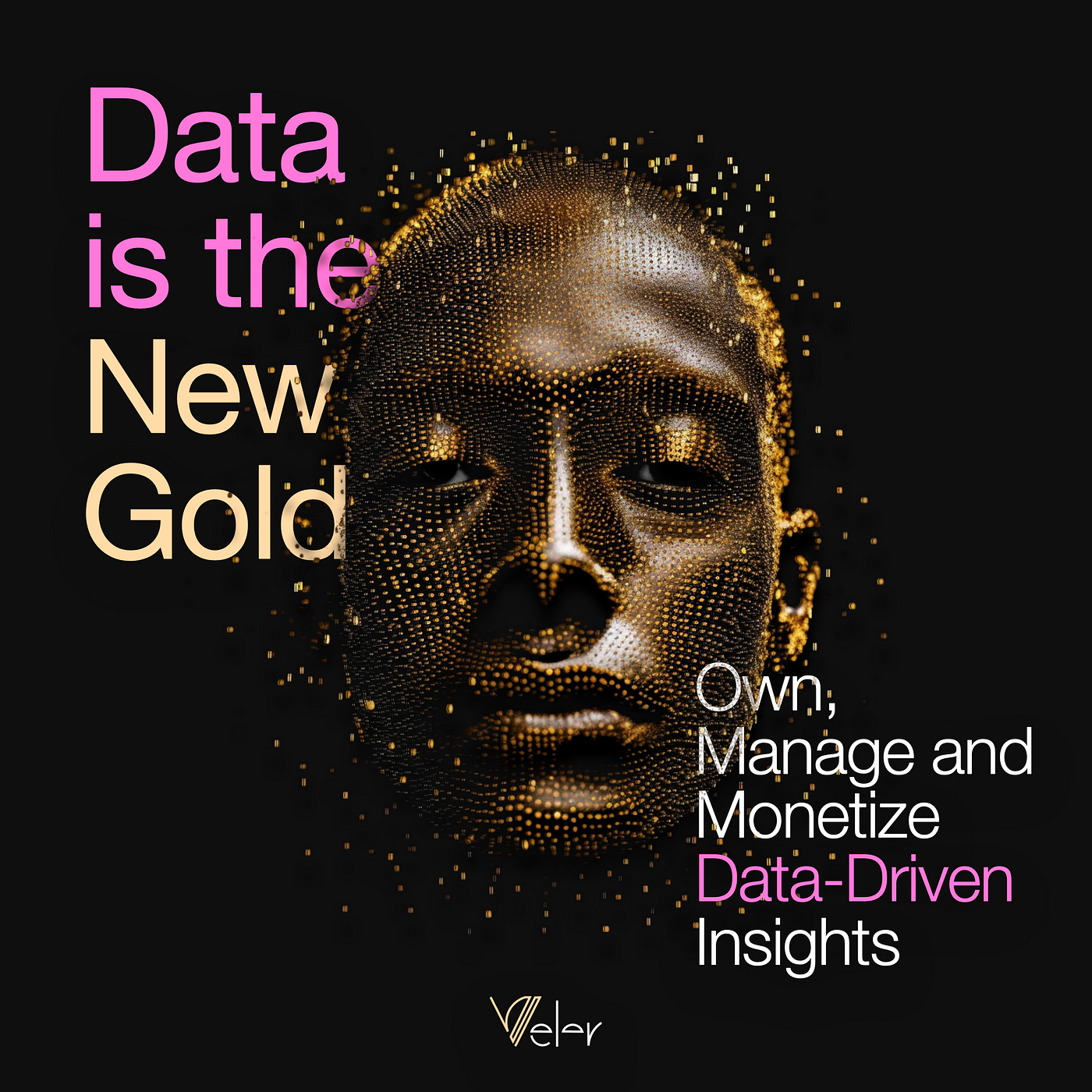
We have explored how companies have used the power of data mining, both as a tool to improve user experiences and, unfortunately, sometimes as a weapon against the very users they serve. Today, we stand on the brink of a monumental change, one that encourages people to take back control and ownership of their personal data.
Data ownership is more than a matter of principle. It has profound implications for our financial, mental and overall situation, in both the short and the long term. With the rise of technologies such as Artificial Intelligence (AI) and Blockchain, the dream of personal data ownership is quickly becoming a reality.
Consider this: every online interaction, every transaction, every click and every like is a piece of data, and it has value. Traditionally, that value has been captured by companies, with little or no benefit for the users who generate the data. What if you could own your data, control who has access to it and be compensated for its use?
Technologies such as Blockchain and AI are making this possible.
Blockchain improves on traditional databases, providing a secure and transparent framework for storing and transacting data, which makes a decentralized data economy possible.
In this economy, people can store their data securely anywhere, have complete control over who can access it and receive direct compensation when they choose to share it. Some earn a financial reward for creating data, some for validating it and others for storing it.
AI, for its part, can analyze personal data to offer valuable insights, recommendations and predictions. For example, health-tracking apps can analyze data on your exercise habits, diet and vital signs to provide personalized health advice. Financial apps can analyze your spending and saving habits to provide personalized financial guidance.
Beyond these individual benefits, personal data ownership can also contribute to the well-being of society. With control over their data, people can choose to support companies that align with their values and contribute to causes they care about.
However, for this paradigm shift to happen, significant changes are needed. People must know their rights over their data and how to exercise them. Regulators must create a legal framework that protects personal data. Companies must adopt business models that respect the ownership of personal data. Our mission is to help you make that transition and reach your full potential.
Finally, as promising as this new era of personal data ownership may be, it is not free of challenges. Issues related to data security, privacy and the digital divide (unequal access to technology) must be addressed to ensure that the benefits of personal data ownership are available to everyone.

The latest company and industry news and updates, straight from VELER.